
Nearly 60% of internet searches now end without a click. This three-part post will explore what's changed since 2025 and what our clients are doing differently.
"How do I get to the top of Google?"
We've heard that question hundreds of times over the past 20 years or so. And for a long time, that was very much the right question to ask. Ranking at the top of Google search results meant visibility, traffic, and new business. Simple.
However, 2025 introduced a massive change in how visibility works.
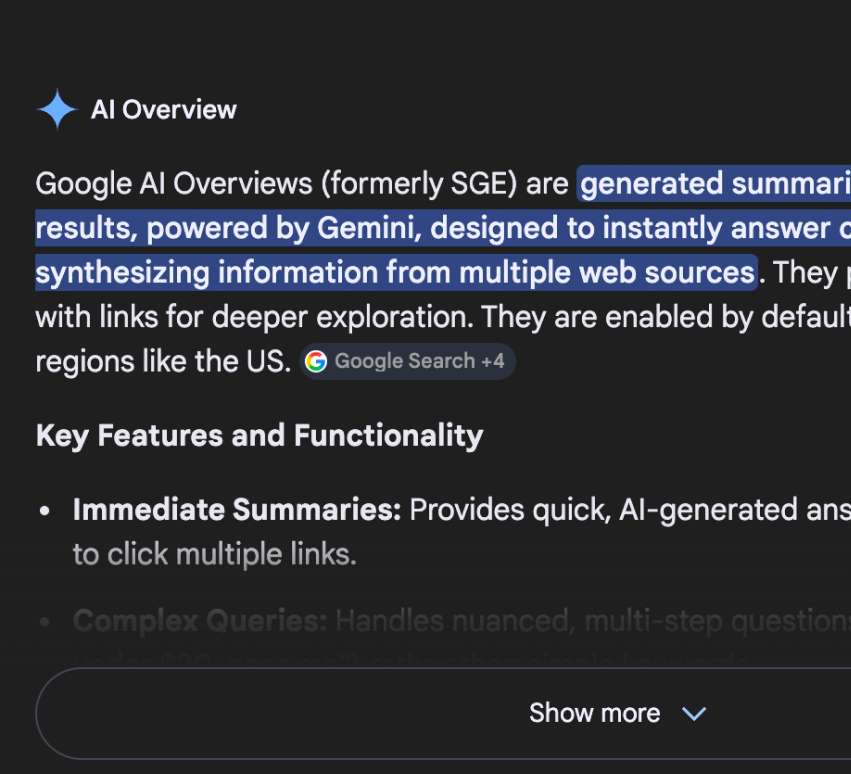
The shift started with Google's AI Overview—announced in 2023, launched in the US in May 2024, rolled out globally that October. Around the same time, ChatGPT went mainstream and user behavior changed—fast. According to a 2025 Bain & Company study, 60% of searches now end without a single click. People get the answer from AI before they ever even reach a website.
The numbers moved quickly. Semrush research, tracking over 10 million keywords, showed Google's AI Overview appearing in 6.5% of search results in January 2025. By mid-summer, that was nearly 25%. Seventy-three percent of B2B websites saw traffic declines. HubSpot—a company that one could argue built its entire brand on SEO—saw organic traffic cut nearly in half. Their CEO said it plainly on an earnings call: AI Overviews are “giving answers, and fewer people are clicking through to websites.”
It would be easy to read that and panic, but AI Overview isn't simply the end of SEO. Total search volume actually grew about 6% over the past year, and the number of clicks reaching websites went up too. What changed is which searches send traffic and which ones don't. Transactional, branded, and local-intent searches are still strong. The reduced-traffic threat is real—but so is the opportunity, if you're willing to adapt.
Throughout this shift in search and SEO, we'd be watching industry trends closely—and we were also watching what was happening with our own clients.
At Propagate, clients on our Voyager Compass and Navigator plans—where we take a proactive monthly approach to SEO, Answer Engine Optimization (AEO), and Technical Site Health—saw something different. While much of the industry was losing traffic, these clients' traffic increased. One saw a 47% increase in overall traffic in 2025. Another went from 163 weekly visitors in May to 501 by December. A third recorded a 46.3% jump in users during Q3 and Q4 compared to the year before. The proactive approach to search visibility put them in a position to gain ground while the rest of the market was giving it up.
The difference was straightforward: they were already doing the work before the market forced them to.
When AI Overview is increasingly the first—and sometimes the only—stop for information, ranking #1 isn't enough on its own. The goal now should really be broader: visibility across the places people actually look. Search results, AI answers, cited sources.
In the next two posts in this series, we'll break down what Answer Engine Optimization actually means in practice, and why your site's technical health is the foundation everything else sits on.
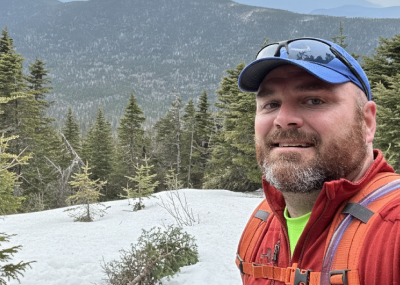
Drew McKenna is the EVP of Innovation & Insights at Propagate. With deep expertise in web development, SEO, and emerging search technologies, Drew helps clients navigate the rapidly changing landscape of digital visibility. He leads the agency's work in Answer Engine Optimization (AEO) and technical site health.

Learning about your organization, goals, and challenges is the first step to us helping you propagate your ideas. Let's get on a call for 30 minutes to chat. We want to know all about you and what fuels you.
Schedule 30 Minutes with Us.
We'd love to hear about your ideas, challenges, and thoughts.